English
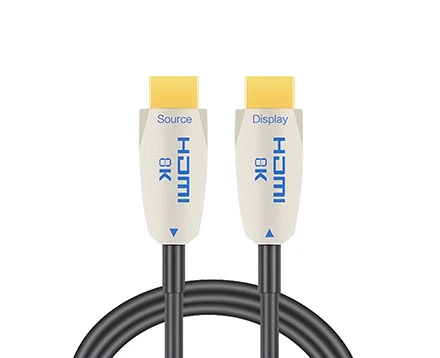
detachable HDMI cables—also referred to as HDMI cables with removable ends, or removable head HDMI cable—are modular connectivity solutions designed for high-performance video transmission, easier installation in tight spaces, and improved long-distance signal stability, especially in commercial AV and industrial integration projects.
In modern engineering applications, especially where structured cabling and maintenance efficiency matter, HDMI with removable head designs are becoming the preferred choice over traditional fixed-head cables.
A detachable HDMI cable is a modular cable system where the connector heads can be detached from the main transmission line. This design allows installers to route cables through conduits, panels, or tight structures first, and then attach HDMI heads afterward.
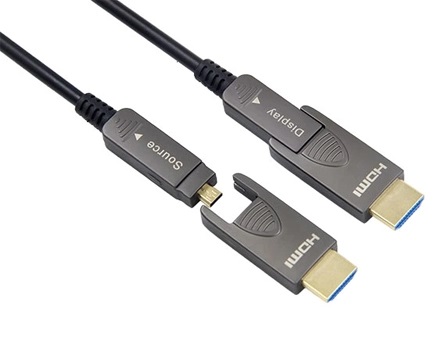
These systems are widely used in professional AV installations, LED displays, and long-distance signal transmission environments.
Understanding the structural differences is critical for procurement and engineering decisions.
| Feature | Standard HDMI Cable | Detachable HDMI Cable |
|---|---|---|
| Installation flexibility | Limited | High (head removed during routing) |
| Maintenance | Full cable replacement | Replace only connector or module |
| Long-distance performance | Limited (copper attenuation) | Excellent (fiber optic options) |
| Use in conduits/panels | Difficult | Easy |
| Upgrade capability | None | Modular upgrade possible |
The detachable HDMI cable system significantly improves installation efficiency in complex engineering environments.
For transmission beyond 10–15 meters—especially in 4K/8K or high refresh rate applications—standard copper HDMI cables often suffer from signal degradation.
A detachable fiber optic HDMI cable is recommended when:
Distance exceeds 30m or more
4K 60Hz / 120Hz or 8K video transmission is required
Electromagnetic interference (EMI) is present
Installation requires long conduit runs
Fiber optic architecture ensures:
Zero signal loss over long distances
Stable bandwidth delivery
Reduced latency in high-performance AV systems
This makes detachable fiber optic HDMI cable systems ideal for stadiums, control rooms, digital signage, and enterprise AV networks.
HDMI with removable head design solves a major installation problem:
Fixed HDMI heads often cannot pass through conduit bends or narrow pathways
Installation damage risk is reduced
Cable pulling becomes significantly easier
In industrial-grade deployment environments, this approach improves both engineering safety and installation efficiency.
Adopting detachable HDMI cable systems offers several advantages:
Reduced installation labor time
Lower risk of connector damage during pulling
Easier maintenance and replacement cycles
Modular upgrade capability without full rewiring
Compatibility with fiber optic HDMI systems
In structured cabling industries (similar to stainless steel piping systems where modular joints improve system maintenance), modular HDMI design provides the same engineering logic: flexibility + maintainability + scalability.
When selecting a hdmi cable with detachable ends, technical parameters must be evaluated carefully:
HDMI version (2.0 / 2.1)
Bandwidth capacity (18Gbps / 48Gbps)
Resolution support (4K / 8K / 10K future-ready)
Transmission type (copper vs fiber optic)
Connector durability cycles
EMI shielding level
Detachable interface locking mechanism
High-end detachable HDMI cable systems often combine hybrid fiber + copper architecture for power delivery and signal integrity.
HDMI cable with detachable ends solutions are widely used in:
Large-scale LED display systems
Conference room AV infrastructure
Smart city digital signage
Broadcast and control centers
Home theater premium installations
Industrial monitoring systems
In these environments, system reliability and serviceability are more important than simple cost optimization.
The shift toward detachable HDMI reflects broader infrastructure trends:
Modular system design (similar to industrial piping systems)
Reduced downtime in maintenance cycles
Increased demand for high-resolution media transmission
Growth of fiber-based AV infrastructure
As bandwidth demands increase, detachable fiber optic HDMI cable systems are expected to replace many traditional fixed copper solutions in professional environments.
A detachable HDMI cable is used in installations where cable routing is difficult or where modular maintenance and upgrade flexibility are required.
Yes, in professional environments. A removable head HDMI cable provides easier installation, reduced damage risk, and better long-term serviceability.
Yes. Most detachable fiber optic HDMI cable systems support 4K, 8K, and even higher future bandwidth standards depending on version.
It is widely used in AV engineering, digital signage systems, broadcast studios, and enterprise control rooms.
Key factors include HDMI version, bandwidth, transmission type (fiber or copper), installation distance, and connector durability.
Copyright © Shenzhen Fiberlink Tech Co., Ltd. All Rights Reserved. Trusted Partners:https://www.aocfiberlink.com/