English
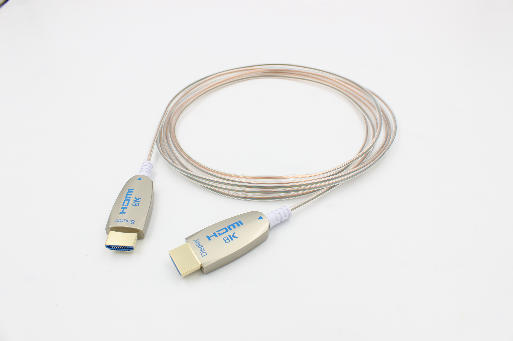
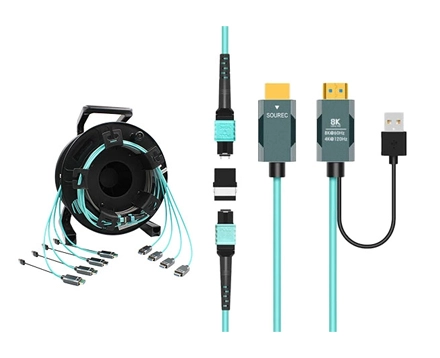
The fiber optic HDMI cable, also called HDMI Active Optic Cable (HDMI AOC), uses the same protocol as a conventional copper cable. Though they look similar, they are quite different in construction. Combining fiber optic and HDMI technology, the fiber optic HDMI cable consists of strands of glass or plastic fibers. Most fiber optic HDMI cables in the market are made of 4 fiber cores (used for data transmission) and 7 to 9 copper wires (1 for power supply, 1 for CEC, 2 for ARC/eARC, and the rest for DDC signal). Fiber optic HDMI cables use light rather than electricity to transmit signals, offering resistance to interference and crosstalk.
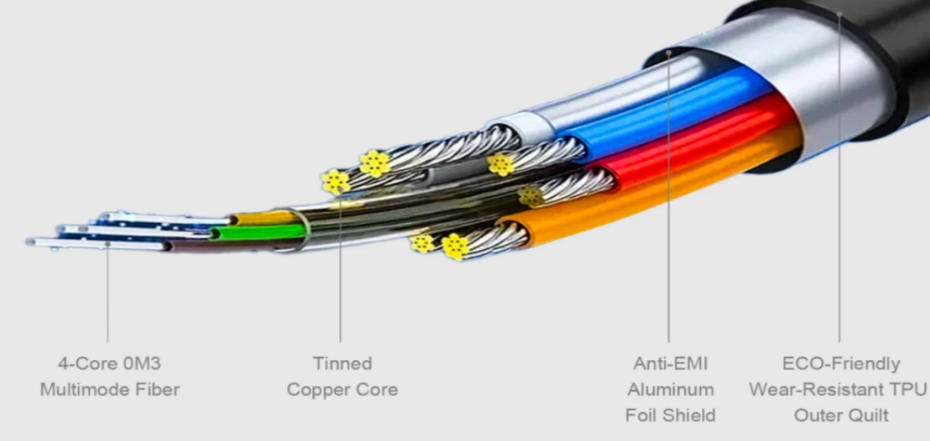
How HDMI signals are transmitted over fiber optic cables:
To make the HDMI protocol work on fiber optic cables, we must resolve a core contradiction: the HDMI protocol is based on a copper-wire electrical protocol (TMDS/FRL), while fiber optic cables can only transmit light pulses.
This involves the core technical architecture of fiber optic HDMI: signal separation and optoelectronic modulation (E-O-E Conversion). We will explain this in detail below by breaking down its internal operating mechanism.
HDMI AOC is not 100% glass; it is a hybrid cable.
High-Speed Lanes (Optical Fiber):
Purpose: Handles massive video throughput (up to 48Gbps for HDMI 2.1). These signals are highly sensitive to attenuation.Signals: TMDS Data (HDMI 2.0) or FRL Lanes (HDMI 2.1) + Clock.Hardware: 4 to 6 strands of OM3/OM4 multimode fiber.
Low-Speed/Control Lanes (Copper Wire):
Purpose: Handles low-frequency, bi-directional handshake signals (optical is too costly for bi-directional use).Signals: DDC (EDID/HDCP), CEC, HPD (Hot Plug Detect), and +5V Power.
When a fiber HDMI AOC cable is connected, the signal undergoes a complete conversion and reconstruction process at both ends.
1.Transmit Side (Source): Serialization and Optical Modulation
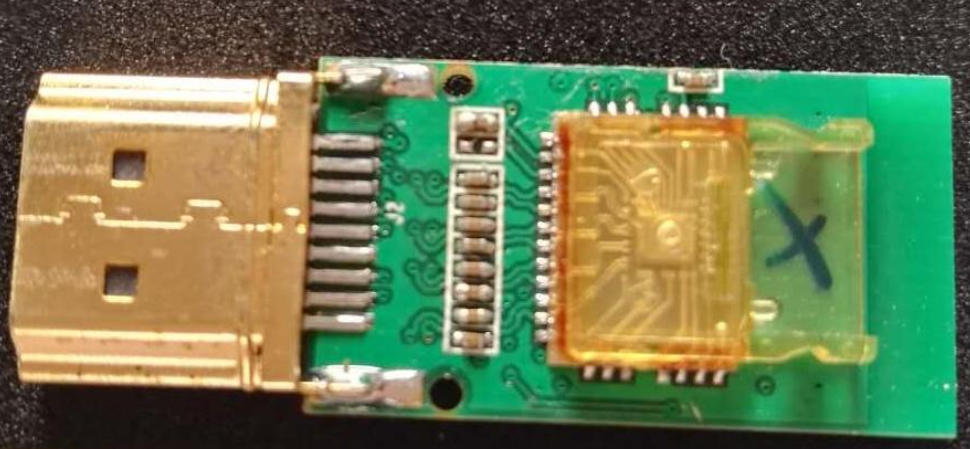
The connector houses a tiny optical transmitter IC.
Signal Input: The graphics card outputs a standard CML level signal (TMDS or FRL encoded).Signal Conditioning: The chip's internal driver circuitry performs equalization processing on the electrical signal.Electro-optical Conversion (E-to-O): The driver controls the VCSEL (Vertical-Cavity Surface-Emitting Laser).
2.Fiber optic transmission.
Photons enter the fiber core (typically a 50μm multimode fiber). Due to the principle of total internal reflection, the optical signal experiences almost no loss during this process and does not generate electromagnetic radiation (EMI) or suffer from external interference like copper wires.
3.RX Receiver (Sink) – Detection and Reconstruction
The connector on the TV side houses a receiver IC.
O-to-E Conversion: The light signal strikes the PD (photodiode), converting the light pulse into a weak current signal.Transimpedance Amplification (TIA): Because the current generated by the PD is extremely weak (microamperes), it must be amplified and converted into a voltage signal with sufficient amplitude by a transimpedance amplifier.Limiting Amplification and Output: This is the so-called Limiting Amplifier, which "shapes" the analog voltage waveform back into a standard HDMI level digital signal, which is then input to the TV chip.
Home Theater
The problem isn't insufficient image quality,but rather projector ceiling mounting + AVR cabinet = inevitable over-distance.The value of AOC is no need for extenders, no need to renegotiate the link.
The value of AOC
no need for extenders, no need to renegotiate the link Conference and Education Systems Core requirements: stability + anti-interference, especially in high-voltage, densely wireless environments.The significance of fiber optic HDMI is removing physical layer risks.
Broadcast Television and Professional AV
More concerned with: HDCP stability and clock consistency. AOC doesn't introduce protocol layer changes, minimizing engineering risks.
Industrial Visualization:
In strong EMI environments, copper HDMI is a "source of accidents." Fiber optics isn't for distance, but for reliability.
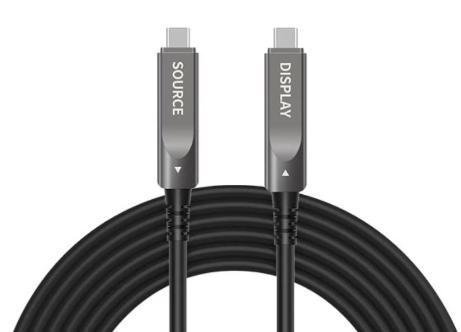
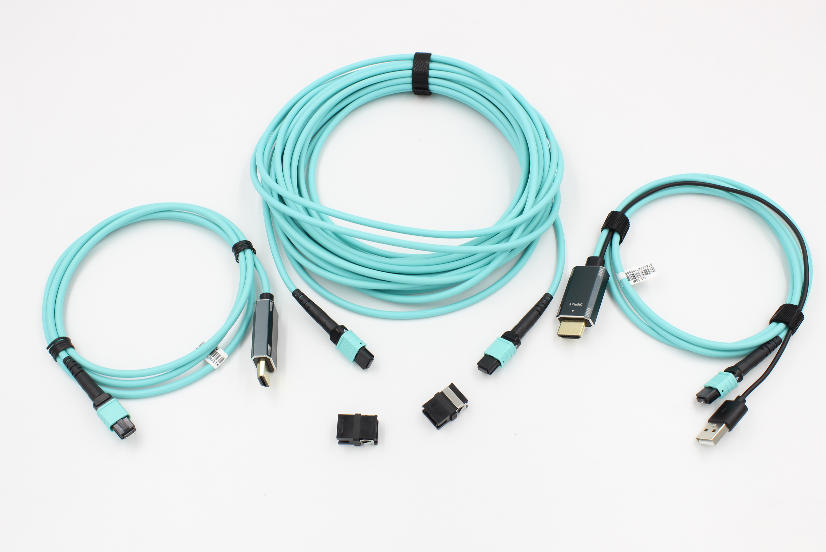
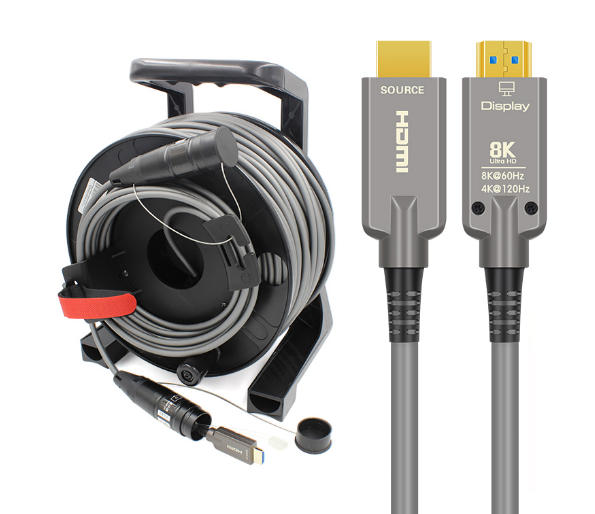
At 8KHDMIAOC, we specialize in manufacturing high-quality fiber optical USB cables & fiber optical HDMI cables that cater to the demands of modern audiovisual systems. Our fiber optical USB & HDMI cables are designed to deliver uncompromising performance, ensuring that you enjoy the true potential of your high-definition devices.
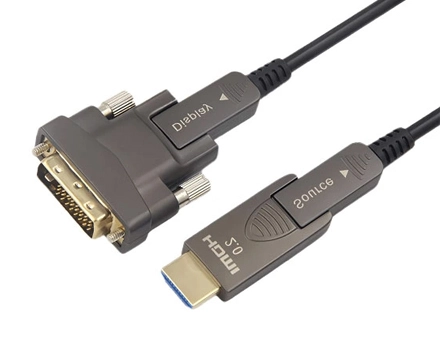
Besides the standard fiber optic HDMI Cables & fiber optical USB Cables, we also provide custom HDMI cables solutions for customer specific needs.
Please don't hesitate to contact us.
|
|
Copyright © Shenzhen Fiberlink Tech Co., Ltd. All Rights Reserved. Trusted Partners:https://www.aocfiberlink.com/