English
Choosing between HDMI and DisplayPort is a crucial decision for many users, especially gamers, home theater enthusiasts, and professionals. While HDMI dominates in home theater systems and game consoles, DisplayPort is generally preferred for high-end PCs and gaming monitors. This article will analyze the key differences between HDMI 2.2 and DisplayPort 2.1 to help you make an informed choice.
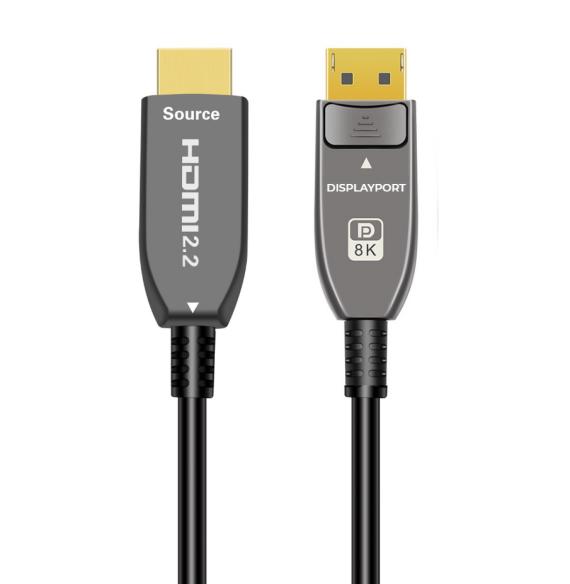
HDMI 2.2 is the latest upgrade to the HDMI standard, primarily targeting ultra-high-resolution TVs and large-screen displays. Its biggest change is a bandwidth increase to 96 Gbps, nearly double that of HDMI 2.1, enabling smooth transmission at higher resolutions and refresh rates.
Based on this bandwidth, HDMI 2.2 supports 8K@240Hz, 12K@120Hz, and even 16K@60Hz when DSC (Display Stream Compression) is enabled. The new standard also optimizes audio and video synchronization and device handshake, and introduces Ultra96 HDMI cable certification to ensure stable performance in real-world use.
Up to 80 Gbps is possible in UHBR20 mode. This is achieved through a new Ultra High Bit Rate (UHBR) signaling level, operating at 10.0, 13.5, and 20.0 GT/s per channel, designed for next-generation display workloads. At the highest UHBR20 level (20.0 GT/s), a four-channel DisplayPort link can deliver approximately 77.4 Gbps of effective data rate, typically rounded to 80 Gbps in official specifications. This bandwidth headroom supports demanding formats such as 240Hz 4K, 120Hz 8K with DSC, and even experimental dual-line 16K display setups—capabilities far exceeding those of DP 1.4. In addition to resolution and refresh rate improvements, DisplayPort 2.1 also enhances multi-monitor support, adaptive synchronization reliability, and link training behavior for high refresh rate gaming and professional displays.
HDMI 2.2 and DisplayPort 2.1 are designed to deliver display performance far exceeding previous standards. But their core differences go beyond just headline-grabbing bandwidth numbers. They reflect two distinct design philosophies, depending on how and where these interfaces are actually used.
Displayport2.1:Adaptability and Flexibility
Channel Structure: Employs four high-speed data channels (Main Link) for signal transmission, supplemented by an independent auxiliary channel (AUX Channel) for management.
Adaptive Capability: Supports Adaptive-Sync/FreeSync technology, which can adjust the monitor's refresh rate in real time based on the graphics card's output frame rate.
Bandwidth Flexibility: The DP protocol packages the transmitted content, allowing the number and speed of channels to automatically adjust according to resolution and refresh rate requirements, making it ideal for supporting multi-monitor displays (MST).Better support for high refresh rates and FreeSync adaptive synchronization.
HDMI2.2: Fixed and widely compatible
Channel Structure: Based on older signal transmission logic, the channel is fixed, designed to ensure compatibility with devices such as TVs and home projectors.
Transmission Characteristics: Although a more efficient transmission mechanism was introduced in HDMI 2.2, it still generally exhibits a fixed high-bandwidth transmission channel.
Application Scenarios: The fixed channel characteristic makes it excellent for scenarios requiring stable large-screen connections, such as home theaters and console gaming.
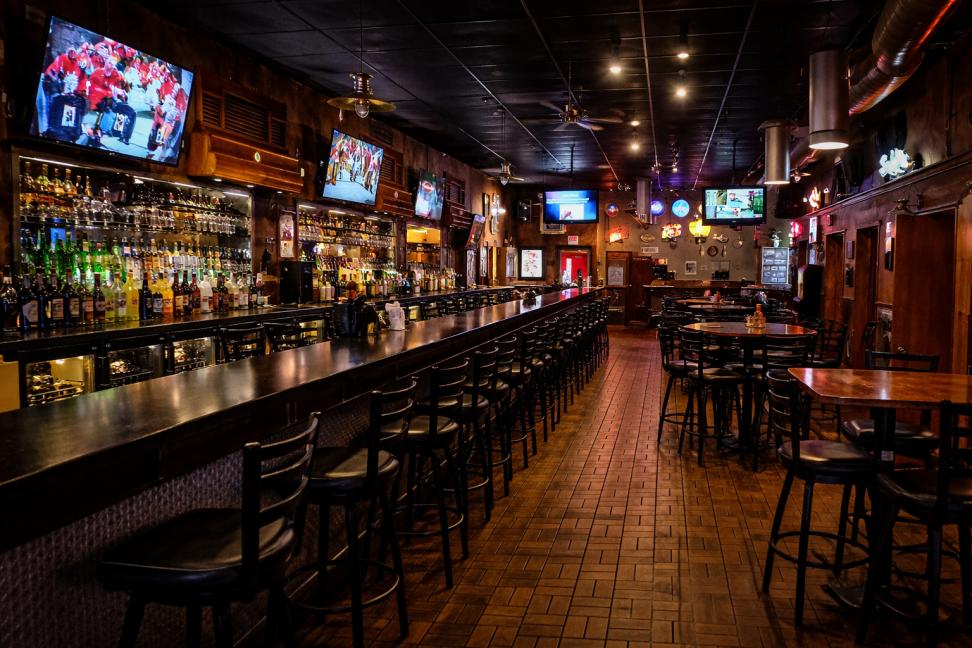
HDMI 2.2 is clearly optimized for televisions, home entertainment systems, or conferencing systems. Its design emphasizes stable, long-distance signal transmission, reliable audio-visual synchronization, and broad compatibility with consumer devices. These priorities are especially important in living room environments, where ease of use and consistency take precedence over fine-grained configuration.
DisplayPort 2.1 has always been centered around the display ecosystem, especially high refresh rate gaming and professional monitors. Features such as higher effective pixel throughput, advanced multi-monitor support, and tighter GPU integration make DP 2.1 more suitable for desktop environments that expect performance improvements.
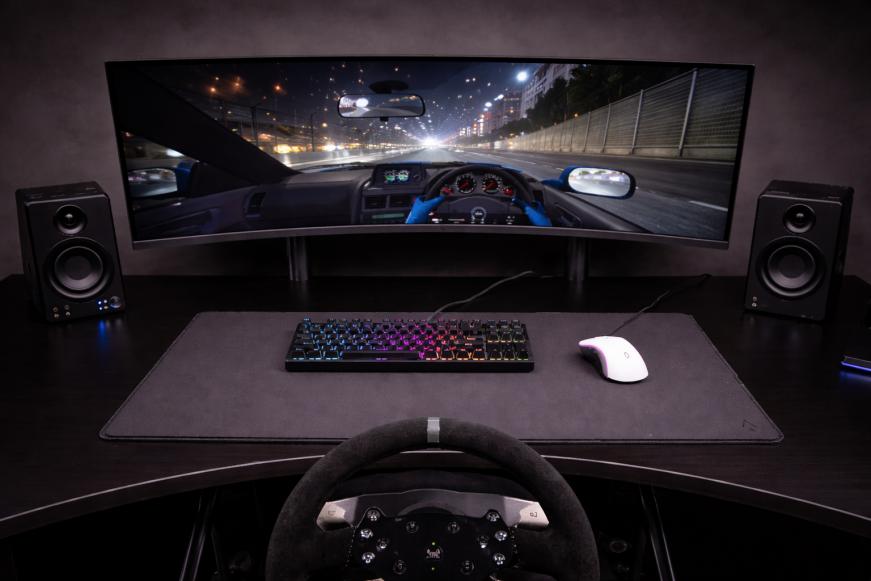
This ecosystem split explains why DisplayPort 2.1 often appears first on cutting-edge monitors, while HDMI 2.2 adoption typically follows in TV lineups.
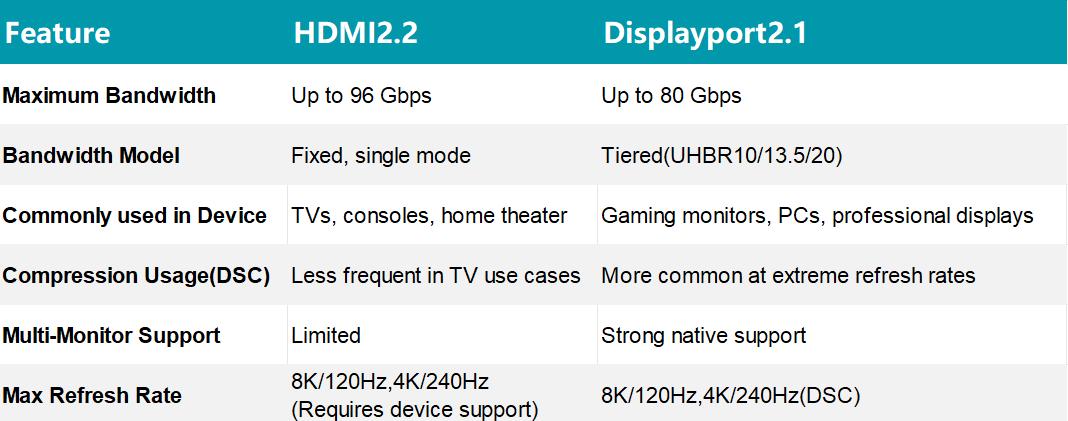
If you strip away specifications and bandwidth charts, the choice between HDMI 2.2 and DisplayPort 2.1 ultimately comes down to where and how the connection is used.
For PC gaming and high refresh rate monitors, DisplayPort 2.1 remains the more practical choice. Its multi-layered UHBR design allows the GPU and monitor to negotiate the highest stable data rate, making it easier to fully utilize 240Hz 4K or ultrawide high refresh rate displays. In the current PC monitor ecosystem, DP 2.1 is more in line with the design of modern GPUs and monitors.
For TVs, home theater systems, and living room equipment, HDMI 2.2 represents a clear step towards the future. With a total bandwidth of 96 Gbps, it is the first HDMI standard to truly approach uncompressed 8K and even higher experimental resolutions, while maintaining compatibility with the HDMI-centric AV ecosystem. With the advent of next-generation TVs, receivers, and source devices, HDMI 2.2 is poised to define the next era of high-end home entertainment.
Therefore, DisplayPort and HDMI cover different areas, and neither can replace the other—they serve different ecosystems and have different priorities.
Specs don’t tell the whole story, your use case does.DisplayPort 2.1 remains the go-to for PC and multi-display environments, while HDMI 2.2 is shaping the future of TVs and home theaters. Understanding their ecosystems is key to making the right call.
Copyright © Shenzhen Fiberlink Tech Co., Ltd. All Rights Reserved. Trusted Partners:https://www.aocfiberlink.com/