English
Fiber optic USB-C cables—also known as optical USB-C cables—use light (optical fiber) instead of copper to transmit data, enabling ultra-long distances, higher bandwidth, and stable signal integrity without electromagnetic interference. They are essential for 8K video transmission, professional AV setups, industrial systems, and next-generation computing environments.
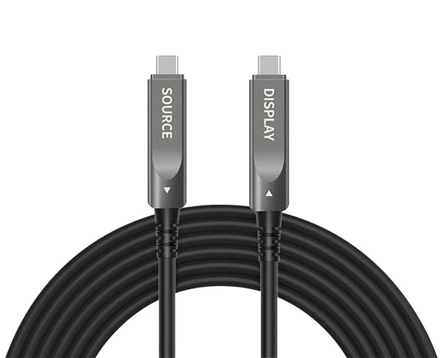
A fiber optic USB-C cable is an active optical cable (AOC) that converts electrical signals into optical signals for transmission through fiber, then back into electrical signals at the receiving end. Unlike traditional copper USB-C cables, these cables integrate optical transceivers within the connectors.
This architecture enables:
Transmission distances up to 50–100 meters or more
Near-zero signal loss
Immunity to EMI/RFI interference
Support for high-bandwidth protocols like USB 3.2, USB4, and DisplayPort Alt Mode
For reference, a typical passive copper USB-C cable struggles to maintain full performance beyond 2–3 meters.
Optical USB-C cables can reach 10x–20x longer distances than copper cables without performance degradation. This makes them ideal for:
Conference rooms
Medical imaging systems
Industrial automation environments
Typical ranges:
| Cable Type | Max Length | Signal Stability |
|---|---|---|
| Copper USB-C | 1–3 m | Degrades quickly |
| Active Copper | 5–7 m | Moderate |
| Fiber Optic USB-C | 10–100 m+ | Excellent |
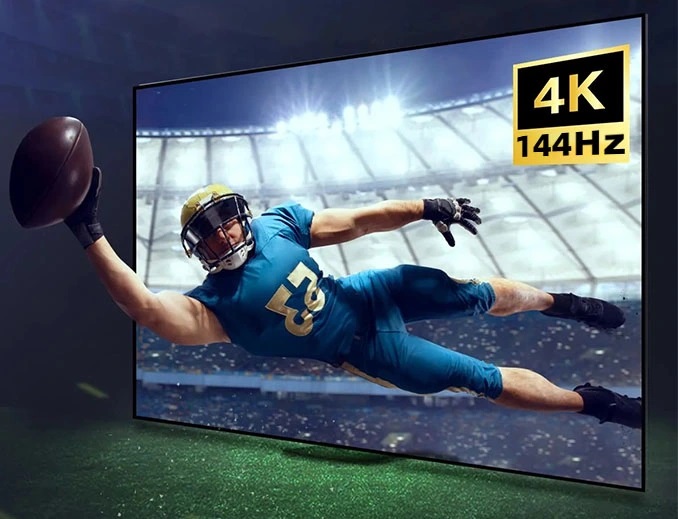
Optical USB-C cables support DisplayPort Alt Mode, enabling:
4K @ 144Hz
8K @ 60Hz
HDR and wide color gamut
They are widely used in:
Professional video editing
Digital signage
Broadcasting systems
Depending on the chipset and specification, optical USB-C cables can support:
USB 3.2 Gen 2 (10 Gbps)
USB 3.2 Gen 2x2 (20 Gbps)
USB4 (40 Gbps)
Fiber ensures consistent throughput without signal attenuation over distance.
Unlike pure fiber cables, hybrid optical USB-C cables include copper lines for power delivery.
Typical support:
60W (most common)
100W (high-end designs)
This allows simultaneous:
Data transfer
Video output
Device charging
Optical USB-C cables are compatible with:
Laptops (MacBook, Windows ultrabooks)
USB-C monitors
Docking stations
VR/AR devices
Industrial equipment
They support protocols such as:
USB data transmission
DisplayPort Alt Mode
Thunderbolt (in some advanced designs)
Fiber transmission eliminates:
Electromagnetic interference (EMI)
Radio frequency interference (RFI)
This is critical in:
Hospitals
Factories
Broadcasting environments
Fiber cables are thinner and lighter than long copper cables, making installation easier—especially in ceiling or wall routing.
Combines optical fiber (data) + copper (power)
Most common type
Supports video, data, and charging
100% fiber transmission
No power delivery
Used in specialized industrial applications
Standard bidirectional connection
Ideal for laptops, monitors, and docking stations
USB-C to HDMI (AOC)
USB-C to DisplayPort
USB-C to USB-A (less common)
Large conference rooms
Digital signage networks
Live event production
Long-distance 8K signal transmission is a key requirement.
High-speed data transfer between servers
Low latency and interference-free communication
MRI and CT scan environments
Zero EMI interference is critical for accuracy
Robotics and machine vision systems
Factory floor environments with heavy interference
High-bandwidth, low-latency connections
Extended cable lengths for immersive setups
Long-distance docking setups
Clean cable management in large spaces
Inside the connectors:
Electrical signals are converted into optical signals via a transceiver
Signals travel through fiber optic strands
The receiving end converts light back into electrical signals
This conversion enables long-distance transmission without signal degradation.
| Feature | Fiber Optic USB-C | Copper USB-C |
|---|---|---|
| Distance | Up to 100m+ | 1–3m |
| Speed Stability | Excellent | Drops over distance |
| Interference | None | Susceptible |
| Power Delivery | Yes (hybrid) | Yes |
| Cost | Higher | Lower |
Fiber is superior for performance-critical and long-distance applications.
Yes—with conditions:
Devices must support USB-C protocols (USB 3.x / USB4 / DP Alt Mode)
Some cables are unidirectional (must be connected correctly)
Not all support Thunderbolt unless specified
Required length (10m, 20m, 50m, etc.)
Data bandwidth (10Gbps vs 40Gbps)
Video resolution (4K vs 8K)
Power delivery requirements
Compatibility (USB4, Thunderbolt, DP Alt Mode)
A reliable USB-C cable manufacturer provides:
Certified chipsets and stable performance
Compliance with USB-IF standards
Custom engineering support
Quality control and durability testing
For businesses, custom USB-C cable solutions ensure optimal performance in specific environments.
Optical USB-C cables are no longer optional in high-performance environments—they are essential. Their ability to deliver ultra-fast, interference-free data across long distances makes them the preferred choice for modern AV, IT, and industrial systems.
For businesses seeking reliability, scalability, and future-proof connectivity, investing in high-quality optical USB-C solutions—and working with an experienced USB-C cable manufacturer—is a strategic decision.
Copyright © Shenzhen Fiberlink Tech Co., Ltd. All Rights Reserved. Trusted Partners:https://www.aocfiberlink.com/