English
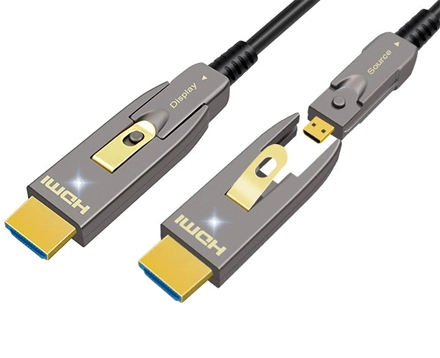
Traditional copper HDMI cables experience signal attenuation over long distances, particularly when meeting the high bandwidth demands of HDMI 2.0 and HDMI 2.1 optical cables. In contrast, fiber optic HDMI cables transmit light signals via optical fibers, effectively eliminating the signal loss issues of copper cables. They support ultra-long transmission distances of up to 500 meters with minimal loss. This makes them especially suitable for large-scale video displays, high-definition surveillance, high-resolution video conferencing, and similar applications, ensuring high-quality transmission of 4K video and high-fidelity audio.
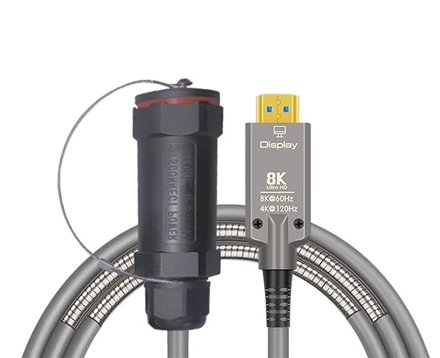
Compared with traditional copper HDMI cables, fiber optic HDMI cables are lighter, thinner, and more flexible, making them ideal for large-scale concealed wiring and installations in tight spaces. With an outer diameter of just 4.8mm, they reduce space requirements and offer greater flexibility for routing. Whether in home theater wiring or complex broadcast control systems, they offer a highly adaptable solution.
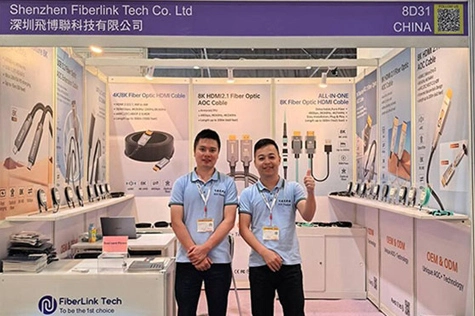
In addition, our newly launched FHDC-2102S series ultra-soft, ultra-thin 8K fiber optic HDMI cable features a transparent PVC jacket and a cable diameter of only 2.5x3.5mm, with a minimum bending radius of just 25mm. This product breaks from convention and redefines the beauty of connectivity. It received widespread praise and enthusiastic feedback from new and returning customers, as well as industry peers, during the Global Sources Consumer Electronics Show in Hong Kong from April 11–14, 2025, with repeat orders continuing to roll in.
Product Link: Super Slim 8K HDMI 2.1 Fiber Active Optical Cable White Shell
Since fiber optic HDMI cables transmit optical signals, they are immune to external electromagnetic interference. In comparison, copper HDMI cables transmit electrical signals, making them susceptible to EMI, which can cause video frame drops and audio distortion. Fiber optic HDMI cables maintain high-fidelity data transmission, making them especially suitable for users with high signal quality demands, such as gamers and professional audio-visual technicians. Even during extended use, there's no need to worry about signal degradation or interference.
As high-definition video and virtual reality technology continue to advance, the ultra-high bandwidth of HDMI 2.1 optical cables (up to 48Gbps) has become a key technology for delivering smooth 4K and 8K images. Fiber optic HDMI cables support high-capacity data transmission, ensuring smooth visuals and detailed rendering even in bandwidth-intensive 3D, 4K, or 8K gaming environments, delivering a more immersive visual experience.
Fiber optic HDMI cables are widely used in systems requiring high-definition video display, particularly in scenarios that demand long-distance, high-quality signal transmission. Typical applications include:
Home Theater Systems: Support ultra-long transmission distances while ensuring high-fidelity video and audio.
High-Definition Surveillance Systems: Ensure stable and clear signals across large monitoring areas.
Multimedia Systems and Large-Scale Medical Imaging Systems: Guarantee high-quality visuals and real-time data transmission.
High-Definition Video Conferencing Systems: Deliver stable, lossless audio and video for enterprise-level meetings.
Large Broadcast and Television Control Systems: Meet the precision demands of HD video signals to ensure smooth live broadcasts.
Copyright © Shenzhen Fiberlink Tech Co., Ltd. All Rights Reserved. Trusted Partners:https://www.aocfiberlink.com/