English
HDCP (High-Bandwidth Digital Content Protection) is a video anti-piracy authentication protocol specifically designed to protect the copyright of high-definition digital content. It acts as a digital security lock during HDMI transmission, requiring both the source (playback) device and the display device to successfully complete a mutual authentication via the HDCP security protocol before the content can be legally transmitted and displayed. Its main purpose is to prevent unauthorized digital recording, such as that achieved using capture cards and similar tools.

HDCP-compatible devices are each equipped with unique cryptographic keys. When you attempt to transmit HDCP-protected content, the two devices automatically exchange these keys with each other. This process serves two critical purposes:
Authentication: To verify that both devices comply with the HDCP standard, acting like the exchange of digital credentials.
Encryption: The keys are used to encrypt the content during transmission, preventing man-in-the-middle attacks from intercepting unprotected media. The content is only decrypted upon reaching the receiving end.
This entire "handshake" process is nearly instantaneous, usually occurring in less than a millisecond. Consequently, when you power on a Blu-ray player or a PS5, if all devices successfully pass the protocol, you can enjoy viewing the content without ever realizing HDCP is at work.
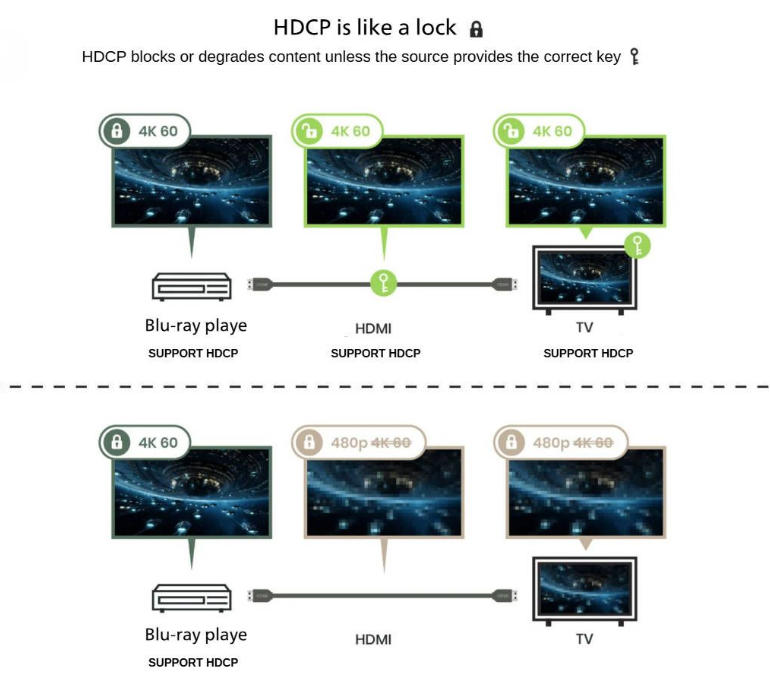
Early versions of HDCP were primarily designed for source-to-display transmission. However, since the advent of HDMI 2.0, the range of devices requiring HDCP support has expanded significantly, encompassing various network A/V devices such as repeaters, extenders, and splitters. To ensure successful content transmission, all devices in the signal path must support the same HDCP standard.
Backward Compatibility: The HDCP protocol supports backward compatibility. This means that newer versions can play content from older versions. For example, devices supporting HDCP 2.3 can successfully play video content requiring HDCP 2.2 certification.
No Forward Compatibility: To ensure proper image display, the HDCP version of all devices in the signal chain must be equal to or higher than the version of the content source.
Consequences: If your display device (screen) version is lower than the HDCP version required by the content source, the system may completely refuse to output the image, or (depending on the content provider's settings) automatically reduce the output quality to meet the lower HDCP standard.

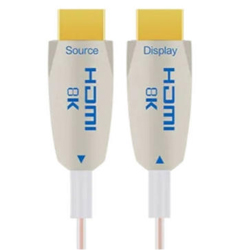
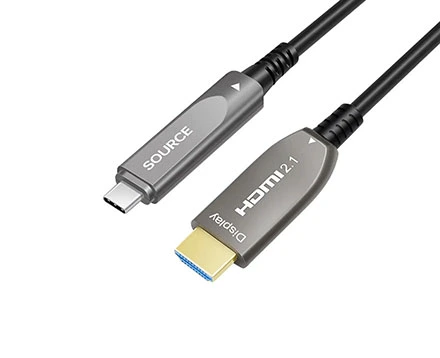
HDMI 2.1 supports HDCP 2.3, enabling 8K at 60Hz and 4K at 120Hz, alongside enhanced security features and an improved key exchange mechanism.
|  |
| FHDC-2102 | FHDC-2101 |
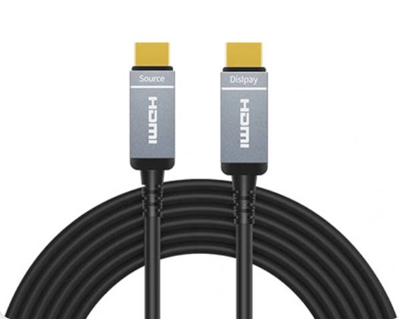
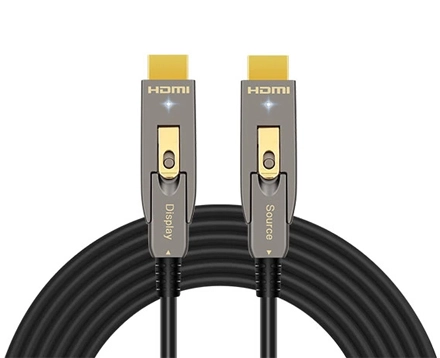
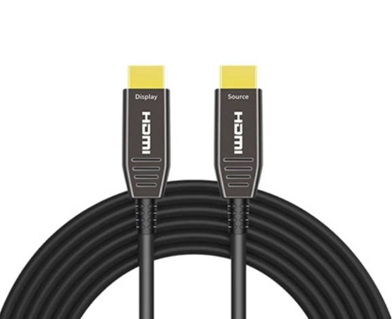
HDMI 2.0 supports HDCP 2.2, offering up to 4K at 60Hz with stronger security, a better key exchange process, and support for DisplayPort features.
 |
|
| FHDC-2001 | FHDC-2001 |
At AOCFiberlink, we specialize in manufacturing high-quality fiber optical USB cables & fiber optical HDMI cables that cater to the demands of modern audiovisual systems. Our fiber optical USB & HDMI cables are designed to deliver uncompromising performance, ensuring that you enjoy the true potential of your high-definition devices.
Besides the standard fiber optic HDMI Cables & fiber optical USB Cables, we also provide tailor-made solutions for customer specific needs.
Copyright © Shenzhen Fiberlink Tech Co., Ltd. All Rights Reserved. Trusted Partners:https://www.aocfiberlink.com/