English
For decades, HDMI has ruled the living room as the go-to connector for TVs, consoles, and PCs. But while it has evolved, it's starting to lag behind emerging competitors, particularly GPMI. Recently announced with USB-C compatibility, GPMI offers more than double the bandwidth of HDMI 2.2 and superior power delivery, surpassing even USB4. However, despite its impressive specs, it's unlikely to challenge HDMI's dominance in Western markets anytime soon.
GPMI, which stands for the rather practical "General Purpose Media Interface," made waves when it was announced in early April. It was developed by the Shenzhen International 8K Ultra High Definition Video Industry Collaboration Alliance (SUCA)—a coalition of tech giants including TCL, Hisense, and Huawei. Following the pushback against Chinese brands in major infrastructure projects like 5G, these companies looked inward to develop competing, proprietary standards. GPMI is a direct result of that pivot.
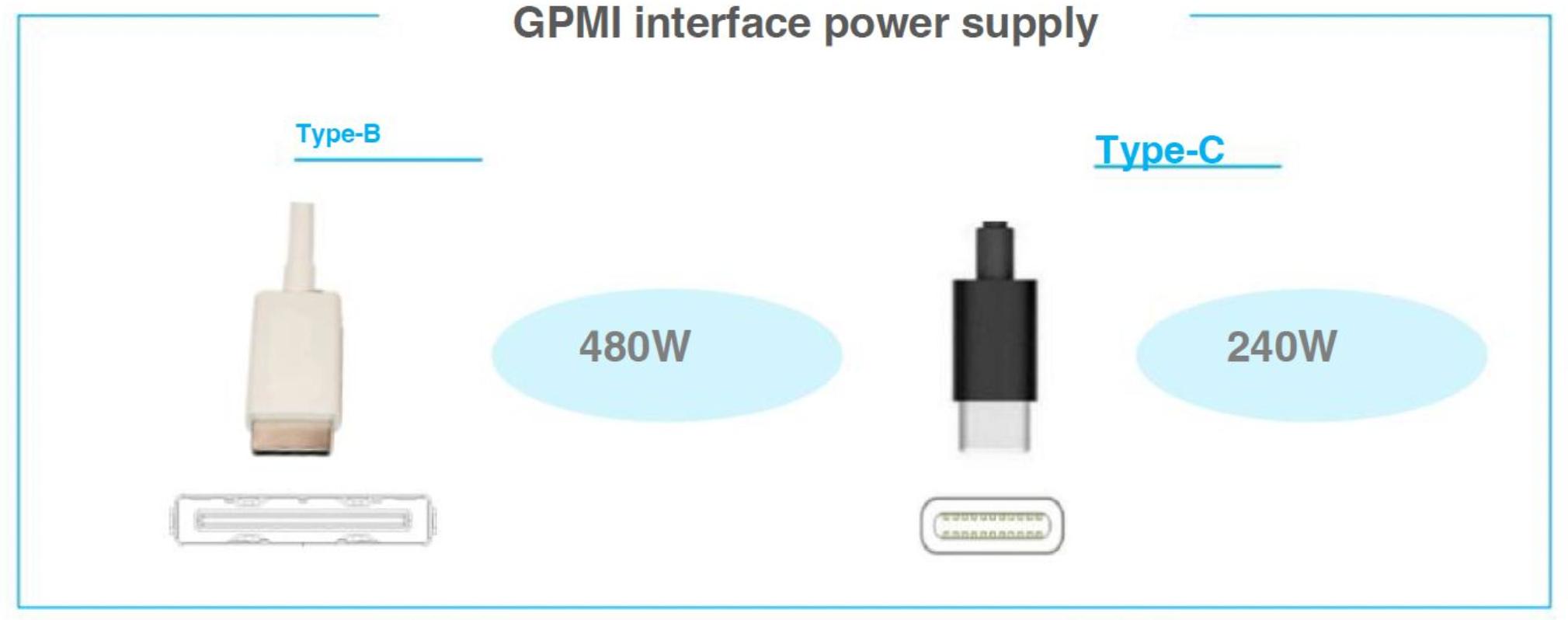
Currently, GPMI comes in two main flavors: Type-C and Type-B.Type-C is the universally friendly option. It is fully certified and compatible with the existing USB-C ecosystem. While it's the less powerful of the two, its specs are still stellar: it offers a 96 Gbps data transfer rate (matching HDMI 2.2) and up to 240W of power delivery. That power delivery—equivalent to the top-tier USB4 connectors—allows for ultra-fast charging. This is a massive advantage in certain scenarios, as power delivery is a feature HDMI simply wasn't designed to support.
Then there is the proprietary Type-B connector. While it lacks USB-C interchangeability, it makes up for it in sheer capability, proving that the companies behind GPMI aren't just looking to compete with HDMI—they want to replace it entirely.
GPMI Type-B boasts a staggering total bandwidth of up to 192 Gbps. That is double what HDMI 2.2 can handle, more than double DisplayPort 2.1, and easily outpaces the absolute best USB4 or Thunderbolt 5 connections. To put that in perspective, 80 Gbps cables are only just hitting the market.
Beyond raw speed, both GPMI variants were designed to solve outstanding connectivity issues in a single cable. Key features include:
Two-way, multi-stream data
Bidirectional control
Power delivery
Compatibility with the USB ecosystem
Ultra-fast transmission
Fast wake-up
Full-chain security
If GPMI can actually deliver on these promises as it hits the market, it will be a heavyweight contender in both the A/V and computing spaces.
On the spec sheet, GPMI wins in a landslide. Its 192 Gbps bandwidth easily eclipses HDMI 2.1's 48 Gbps and HDMI 2.2's 96 Gbps. Even with the Type-C variant, the addition of USB-C compatibility and high-wattage power delivery gives GPMI an edge that HDMI physically cannot match.
So, how does HDMI survive? Through a massive ecosystem, deeply ingrained features, and absolute ubiquity. Outstanding specs are great in theory, but they have to matter in the real world.
HDMI delivers a suite of features that are now fundamental to modern entertainment. It supports mainstream high refresh rates and resolutions, Display Stream Compression (DSC), variable refresh rates (VRR), and auto low latency mode (ALLM) for gaming. It also includes Quick Frame Transport (QFT) and Quick Media Switching (QMS) to reduce lag. Furthermore, HDMI 2.1a introduced Source-Based Tone Mapping (SBTM), and the upcoming HDMI 2.2 will roll out a Latency Indication Protocol (LIP) to perfectly sync audio and video in complex home theater setups.
More importantly, HDMI is everywhere. It's built into every modern TV, game console, and graphics card, and is backwards compatible across two decades of devices. Replacing it requires a lot more than just winning a numbers game.
GPMI has the potential to be a powerful connector, but it needs industry support. Brands like Huawei, Hisense, and TCL may adopt it, but Western giants like Samsung, Sony, and LG are deeply invested in HDMI and have little incentive to switch.
There's also the ecosystem challenge—without devices like gaming consoles or Blu-ray players supporting GPMI, even if an LG OLED TV adds the port, it would remain a misunderstood USB-C slot.
Moreover, the consumer need for GPMI is questionable. HDMI 2.2 already handles 8K at 120Hz and 4K at 480Hz, while 8K adoption is still years away. Most gamers don't need 192 Gbps bandwidth, and HDMI is familiar, ubiquitous, and backward compatible. Until GPMI offers clear advantages beyond specs, it will struggle to unseat HDMI.
At 8KHDMIAOC, we specialize in high-performance AV and data transmission products including fiber optic HDMI, DisplayPort, USB4, and USB-C active cables for global OEM/ODM markets. With a deep understanding of emerging interface trends like GPMI, we help our clients stay ahead of the curve.
Contact us today to learn more or request a custom solution.
Copyright © Shenzhen Fiberlink Tech Co., Ltd. All Rights Reserved. Trusted Partners:https://www.aocfiberlink.com/